How to choose a knife sharpener
The right sharpener depends on three things: what you sharpen (a hunting knife, a fillet knife, an axe), where you sharpen (in the field or at home) and how much control you want over the edge. A pocket sharpener brings a dull blade back in a few strokes during the hunt; stones and an electric sharpener give you the finest edge at home.
We carry pull-through sharpeners, pocket sharpeners, sharpening stones, a guided stone kit and the WorkSharp electric sharpener, plus knife bags and sheaths. We deliver across Europe for €10, or you can collect your order free at our range in Riga.
Types of knife sharpener
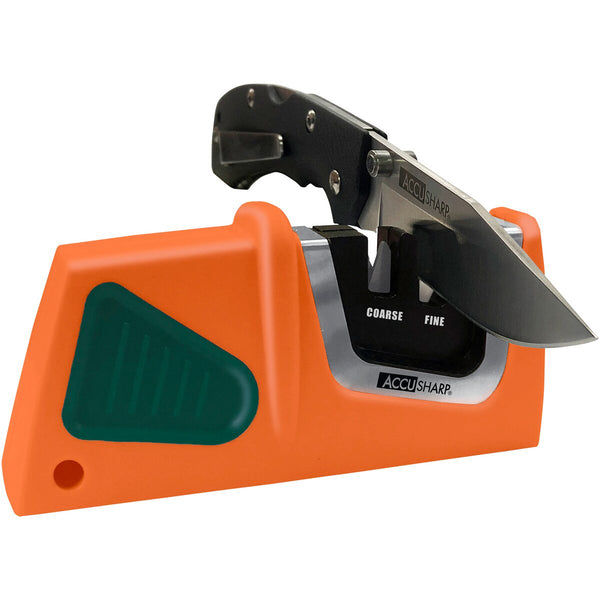
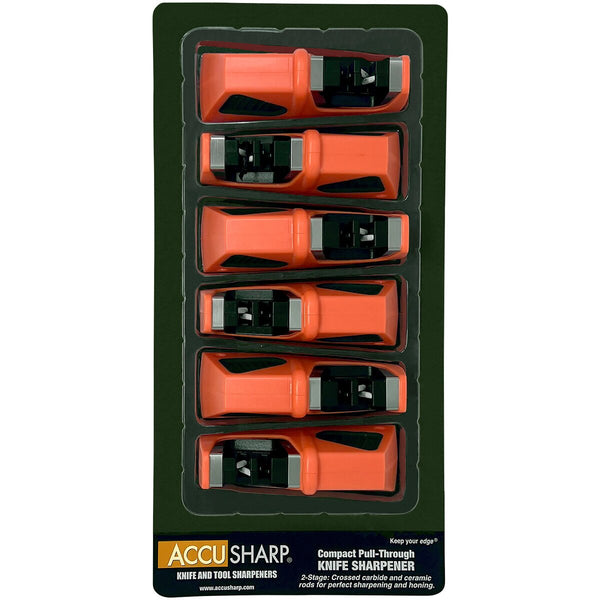
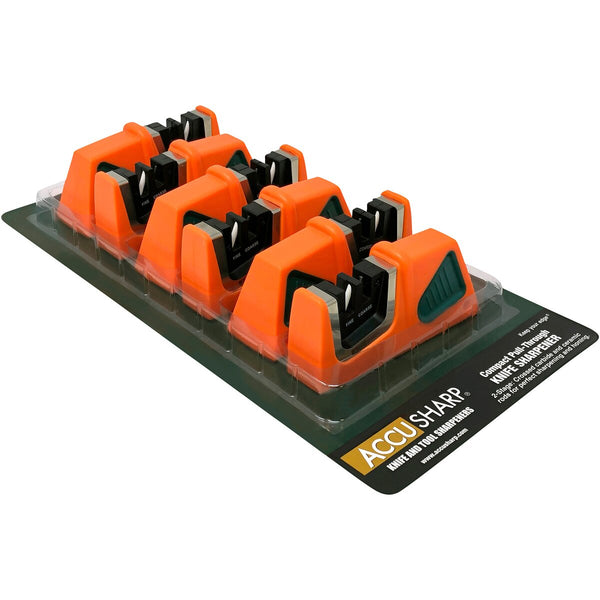
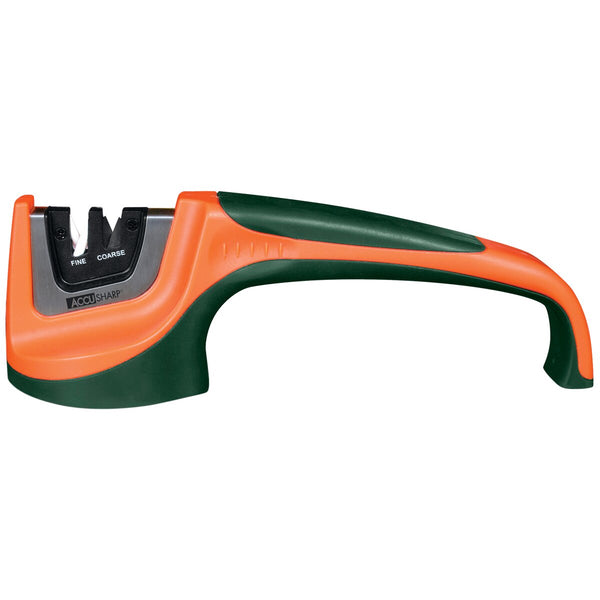
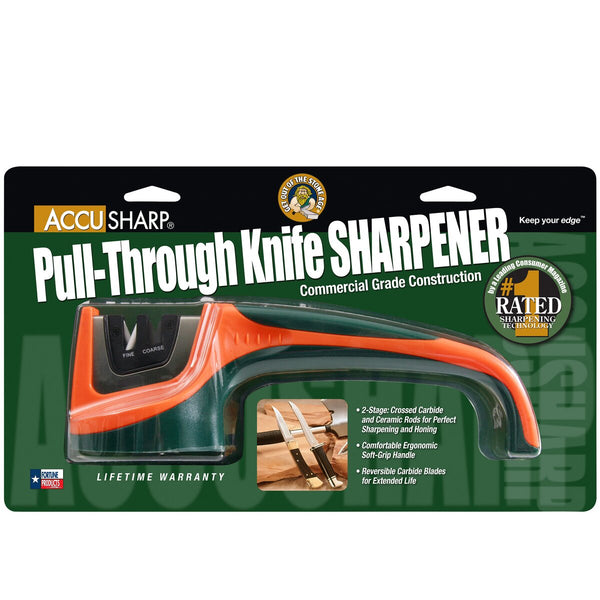
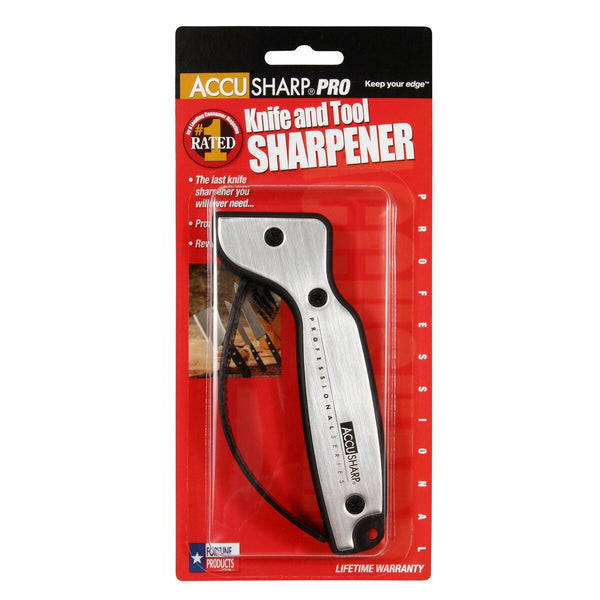
- Pull-through sharpeners are the quickest. A coarse tungsten carbide stage sets the edge and a fine ceramic stage hones it. The Accusharp Knife and Tool Sharpener has a large handle with a finger guard and also sharpens hatchets and serrated blades in 3–4 strokes. The Accusharp Pull-Through Compact weighs 136 g, and the Graef Piccolo has a fixed 20° angle and weighs 42 g.
- Pocket sharpeners for the field: the Accusharp SharpN'Easy (two ceramic stages, a lanyard hole for your pack) and the Diamond Pro 2-Step (a diamond surface for rough work such as removing burrs, ceramic for the final edge, in brushed aluminium).
- Sharpening stones: the Accusharp Arkansas pocket stone is a natural stone for straight blades of any steel, with a groove for fish hooks and arrowheads and a bag with a belt loop.
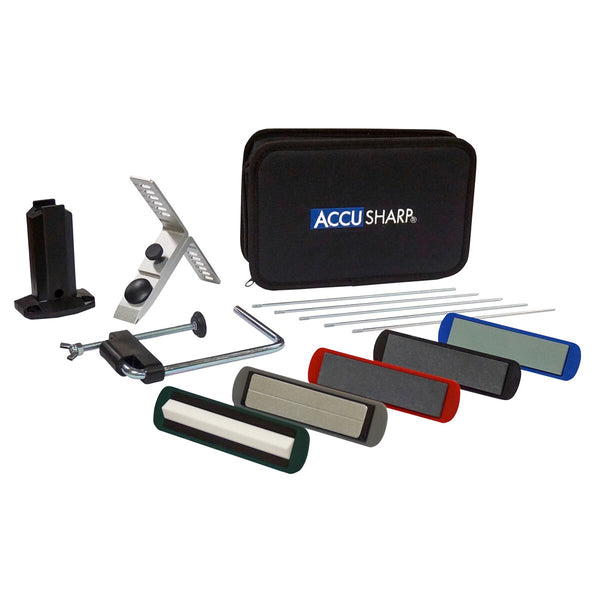
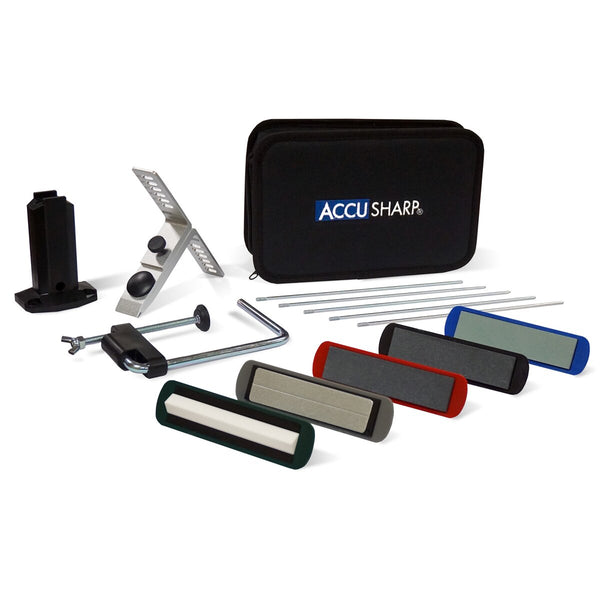
- Guided stone system: the Accusharp 5-Stone Precision Kit clamps the blade and guides the stone at one of six angles from 11° to 30°, so every stroke hits the same angle. It bolts or clamps to a worktop or works in the hand.
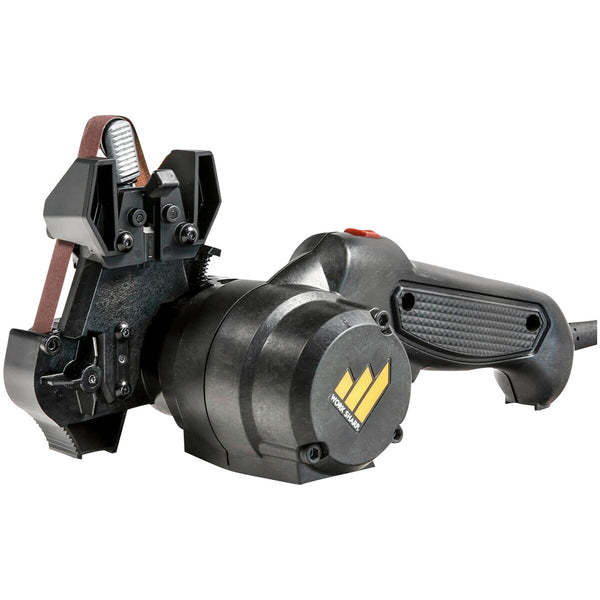
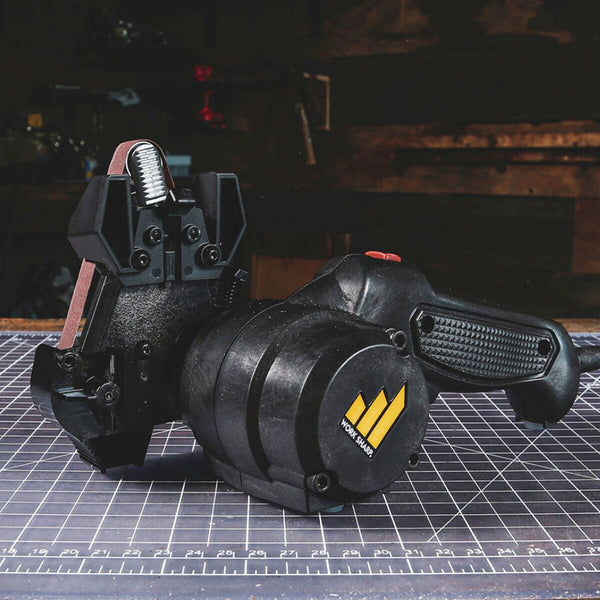
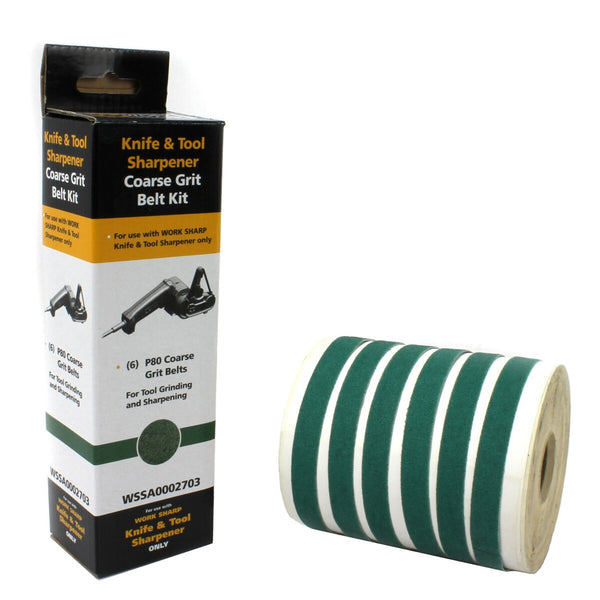
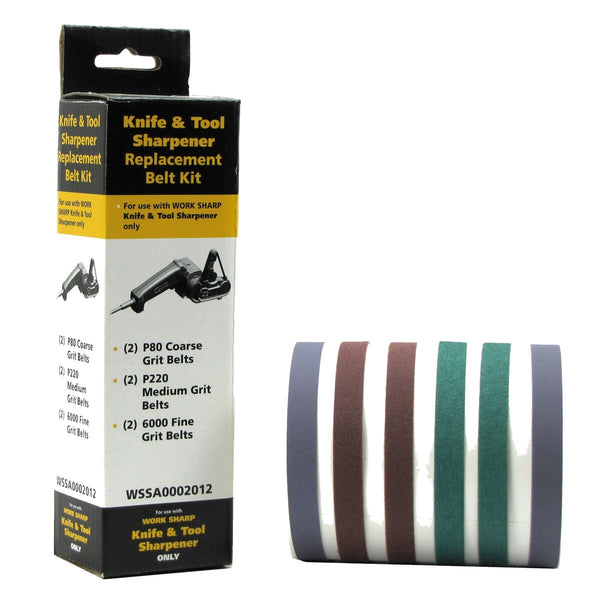
- Electric sharpener: the WorkSharp Knife & Tool MK II sharpens with flexible belts at two speeds, with a guide set to 20° or 25°. It handles pocket, outdoor and kitchen knives, scissors and serrated edges, and with a coarse belt even axes, chisels and lawnmower blades. It runs on 220 V mains.
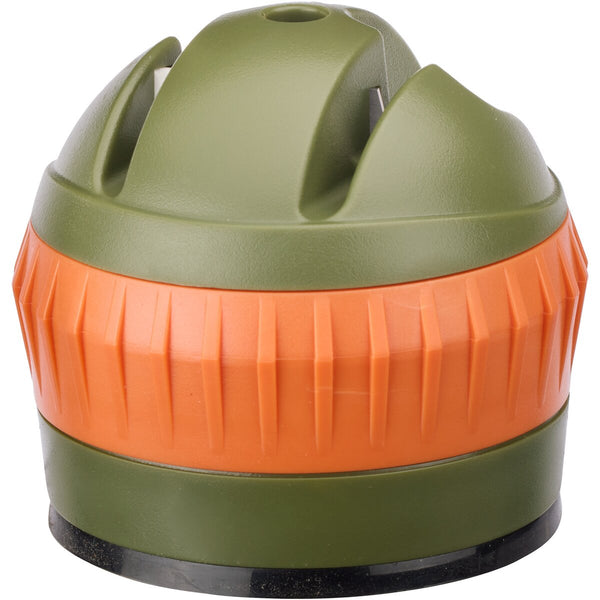
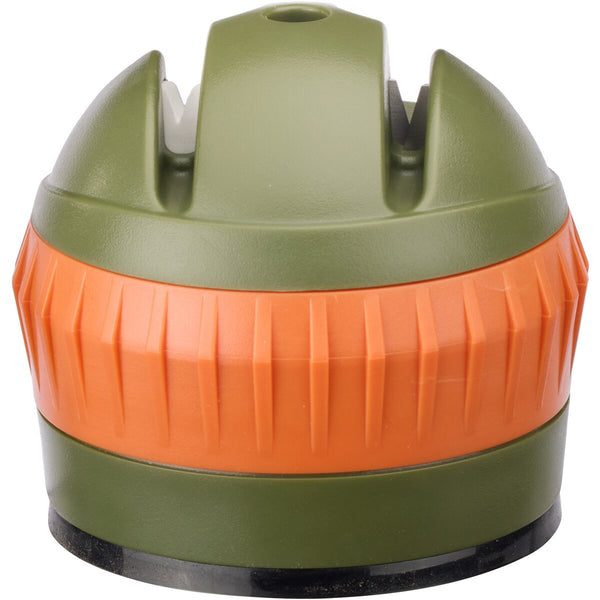
- For the game room: the Parforce sharpener with suction base locks onto a smooth stainless table, with a tungsten stage for deburring and a ceramic stage for the final edge.
Which sharpening angle?
The angle is measured on each side of the blade. A smaller angle cuts more easily; a larger angle holds its edge longer.
- 15°: Japanese and other Asian kitchen knives.
- 18–21°: most knives, a balance between sharpness and edge life.
- 20°: chef's knives (WorkSharp's kitchen setting, and the fixed angle of the Graef Piccolo).
- 12–18°: Morakniv hunting and outdoor knives (Morakniv gives 23–35° in total).
- 25°: a tougher working edge for hunting and pocket knives that cut through hide, cartilage and wood.
- 30°: tools and machetes.
If your knife has a Scandinavian grind, as most Morakniv knives do, the whole bevel is the edge: lay it flat on the stone and follow it, rather than putting a new, steeper angle on it.
Not sure which angle your knife has? Keep the one it came with: colour the bevel with a marker, make a couple of light strokes and see where the ink rubs off. Our guide How to sharpen a hunting knife walks through it step by step.
What grit means
The lower the number, the coarser the abrasive. Coarse grits remove steel fast and repair damage; fine grits polish the edge.
- 80: axes, lawnmower blades and badly damaged edges (WorkSharp P80 belt).
- 120–220: restoring a dull edge (5-Stone kit coarse and medium stones, WorkSharp P220).
- 280–320: finishing; the grey 320-grit diamond stone in the 5-Stone kit is meant for very hard steel.
- 1500–6000: honing and polishing to a razor edge (the 1500-grit ceramic V-stone, also used for serrations, and the WorkSharp P6000 belt).
On pull-through sharpeners the carbide stage is the coarse step and the ceramic stage is the fine one.
Sharpening in the field and at home
- In the field: a few light strokes on a pocket sharpener, always in one direction and without pressing hard, bring the edge back. Rinse or wipe the blade afterwards.
- At home: start on a coarser stone until you feel a small burr along the whole edge, then move to finer stones and finish with light strokes on alternating sides. A guided system or the WorkSharp keeps the angle the same from heel to tip.
- Between sharpenings: a few strokes on a fine ceramic stage after each hunt keep the edge working longer, so you remove less steel overall.
Serrated blades, hooks, arrowheads and axes
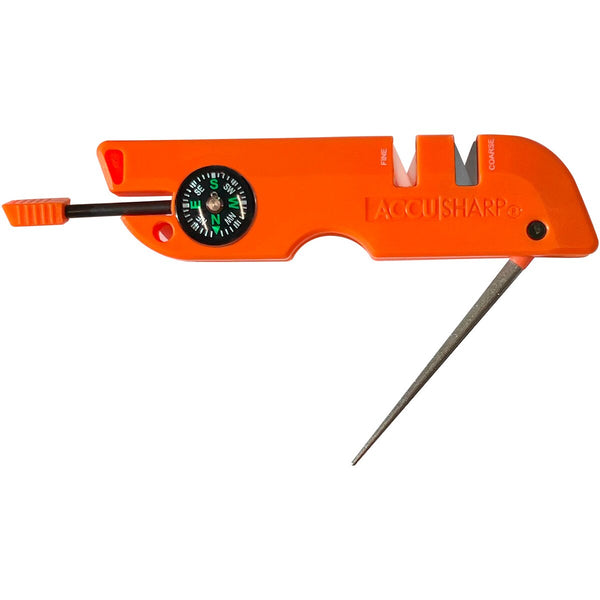
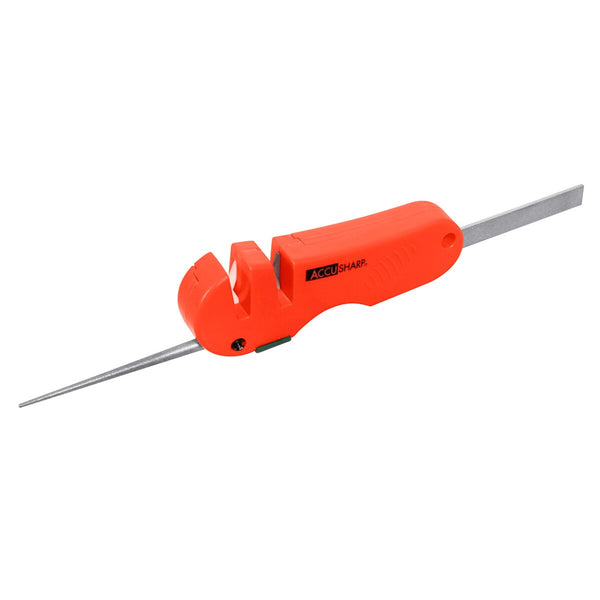
- Serrated edges: the Accusharp 4-fold Knife and Tool Sharpener has a retractable tapered diamond rod for the serrations, plus carbide, ceramic and a flat diamond stone. The ceramic V-stone in the 5-Stone kit and the WorkSharp also sharpen serrated blades.
- Fish hooks and arrowheads: use the groove in the Arkansas pocket stone or in the 4-fold sharpener.
- Fillet knives: the Accusharp fillet knife sharpener is small enough for a tackle box and is rustproof.
- Axes and hatchets: the Accusharp Knife and Tool Sharpener or the WorkSharp with a P80 belt. Protect the edge afterwards with a Böker Plus leather axe sheath.
Carrying and storing knives
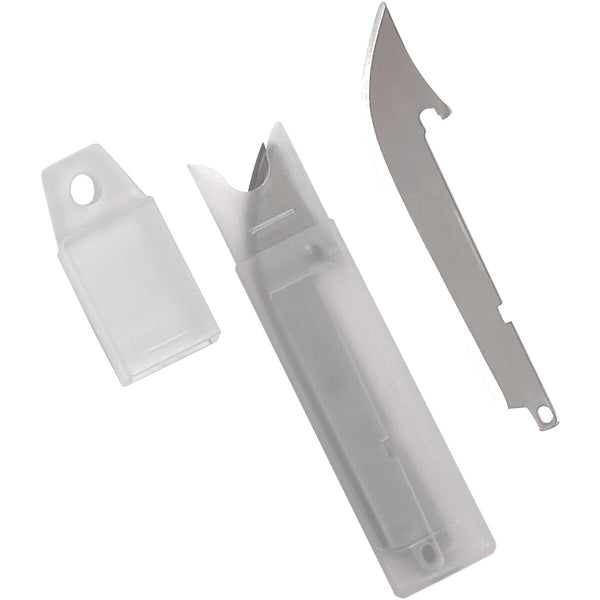
A sharp edge lasts longer when it doesn't knock against other tools. The Morakniv knife bag has five compartments and is made of recycled polyester, and the DICK roll bag rolls up for the field. Replacement parts include Accusharp replacement sharpening blades and WorkSharp belt packs in 80, 6000 or mixed grits.
Knife sharpener prices
- Under €15: Accusharp SharpN'Easy (€7.99–10.99), Parforce suction-base sharpener (€9.99), Graef Piccolo (€14.99).
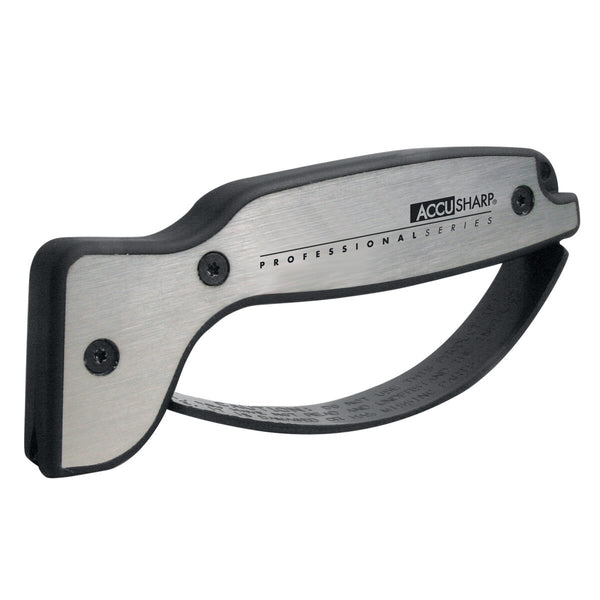
- €15–40: Accusharp Pull-Through Compact (€16.99), Knife and Tool Sharpener (€19.99–21.99), Arkansas pocket stone (€20.99), fillet knife sharpener (€20.99), Diamond Pro 2-Step and 4-fold (€26.99), Accusharp Professional (€39.99).
- €40–100: Accusharp 5-Stone Precision Kit (€82.99).
- Over €100: WorkSharp Knife & Tool MK II (€186.99).
Looking for a knife to go with it? See our hunting and outdoor knives, or shop by brand: Accusharp and Morakniv.
Our advice
For most hunters, two sharpeners cover everything: a pocket sharpener such as the Accusharp SharpN'Easy or Diamond Pro 2-Step in the pack, and either the 5-Stone Precision Kit or the WorkSharp MK II at home. If you only want one, start with the Accusharp Knife and Tool Sharpener: it's quick, safe thanks to the finger guard, and handles knives and hatchets. Not sure which suits your knife? Message us and we'll help you choose.