How to choose a hunting knife
Not every knife that shines is a hunting knife. On a hunt, your knife has to gut the animal, skin it, break down the meat and sometimes saw through bone. Usually in the cold, in the wet and with bloody hands. So choose by the job it will do, not by how impressive it looks on the shelf. Below we cover how blades, steels and handles differ, and which knife suits which job.
Fixed blade or folding?
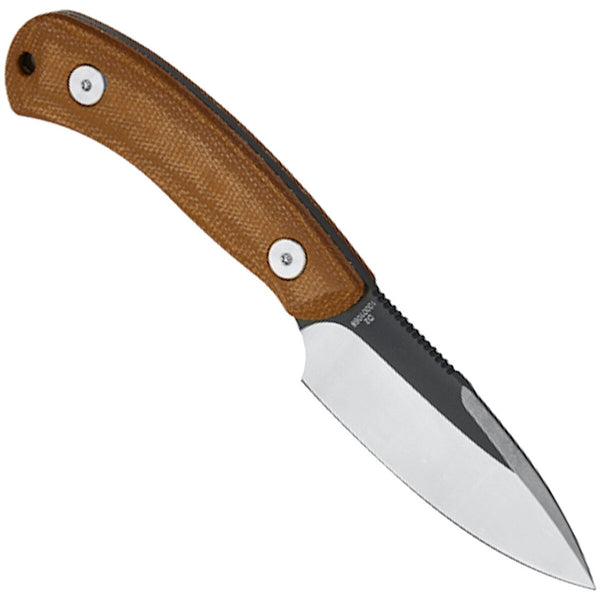
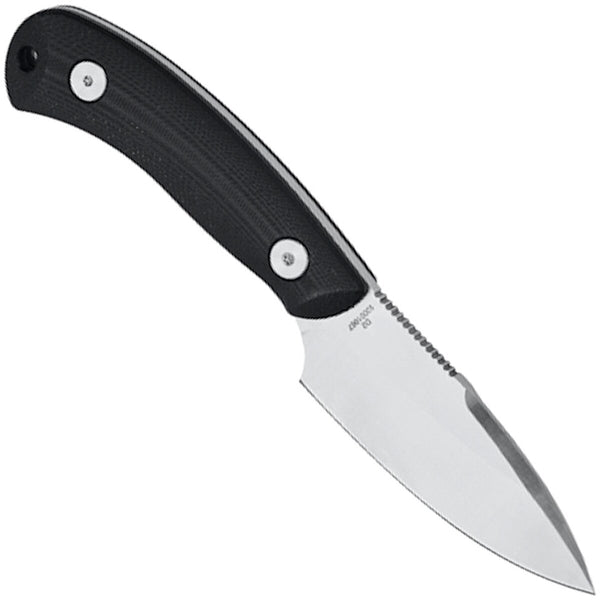
A fixed-blade knife is the workhorse of the hunt. There's no folding mechanism to loosen or clog with blood and hair, it's easy to clean, and it takes real load when you open the chest cavity or cut through tendons. Examples: Morakniv Kansbol and Garberg, EKA SwedBlade, Buck 664 Alpha Hunter and most Parforce knives.
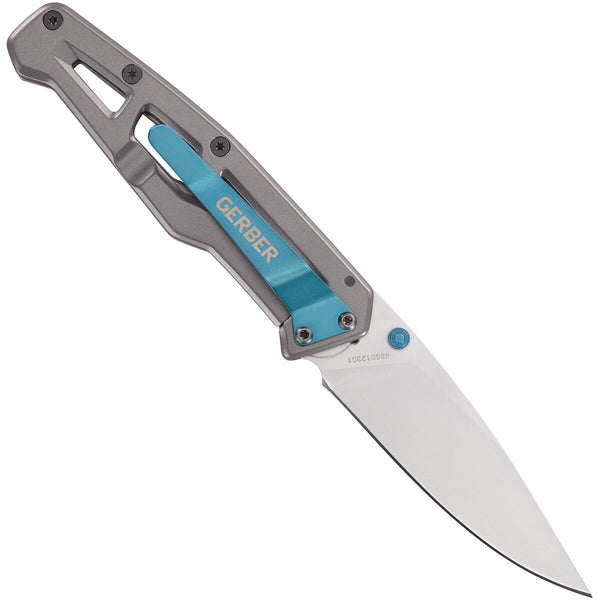
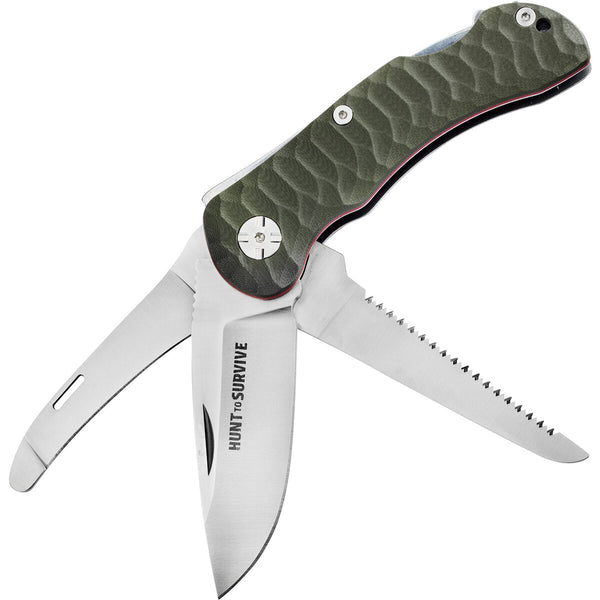
A folding knife, on the other hand, is easier to live with day to day and stays out of the way in a hunting tower. A good pocket knife fits in any pocket and is always to hand. The Victorinox Hunter XT opens with one hand and adds a saw for light woodwork.
Our advice: if you gut and butcher your own game, get a fixed blade. A folder makes a good backup.
Blade shape: which suits your job?
- Drop point: the all-rounder. The tip is strong, and when you open the animal it's harder to puncture the guts by accident. Examples: Victorinox Hunter XT and EKA SwedBlade G5.
- Clip point: a finer, more pointed tip for detailed work, but more fragile. Example: Böker Plus Atlas Backlock Clippoint.
- Skinner: a wide, curved blade for long, even strokes when skinning. Example: Kershaw Deschutes Skinner.
- Gut hook: a hook-shaped cut-out on the spine that opens the belly without cutting into the organs.
The EKA SwedBlade G5 puts two blades in one: it swivels between a drop point and a gutting blade.
Steel: stainless, carbon or Damascus?
The steel decides how long the knife holds an edge, how easy it is to sharpen and how quickly it rusts.
- Stainless steel is the safest choice for damp northern forests. The EKA SwedBlade G5 uses Swedish Sandvik 12C27 (57–59 HRC), the Buck 664 uses 420HC, and the Parforce Bayerischer Nicker and Sautöter use 440C.
- Carbon steel takes a very keen edge and is easy to resharpen. The Morakniv Bushcraft Black Blade has a black coating that protects it from corrosion, but wipe it and keep it dry after use.
- D2 steel holds its edge well even under heavy use. The Kershaw Deschutes Skinner and the Herbertz D2 belt knives are made from it.
- Damascus steel (Parforce, Böker, Herbertz) is a craftsman's piece as much as a tool. People choose it for its looks and tradition, and a Damascus knife makes a fine gift for a hunter.
Length and handle
Most all-round hunting knives have a blade of around 10 cm: the Morakniv Companion is 10 cm; the Kansbol, Garberg and Bushcraft Black Blade are 10.9 cm. That's comfortable for skinning and cutting through joints, and it doesn't get in the way on a belt.
The handle has to stay put when your hand is wet, cold or in a glove. Rubber and G10 handles don't slip and are easy to wash. A stag-horn handle, as on Parforce knives, is a classic with character. A bright orange handle or sheath, like the Morakniv Companion Hi-Vis or the Parforce Sautöter, helps you find the knife if it drops into the moss.
Tools for boar and other hoofed game
Wild boar hunting is common across the Baltics and much of Europe, and it has its own tools that you won't find in an ordinary knife shop.
- Sautöter (German for "boar killer"): a heavy full-tang knife with a guard and a 3.6 mm thick 440C blade, made for finishing a wounded boar. The Parforce Hatz-Watz Sautöter Basse has a bright orange G10 handle.
- Bone saw: a compact saw with triangular teeth for cutting through the pelvis and ribs. The Parforce saw has a stag-horn handle and a leather sheath.
- Jagdnicker: the traditional Bavarian hunting knife. The Parforce Bayerischer Nicker is forged, with a 440C blade, stag-horn handle and a leather sheath you can wear on a belt or in the knife pocket of leather trousers.
Everything else for butchering and trophies, from butcher's knife sets and bone saws to game hanging hooks, vacuum sealers and trophy shields, is under Game Preparation & Trophies.
Sheaths: how to carry your knife
A good sheath is half the knife. The Morakniv Kansbol and Garberg Multi-Mount sheath can be worn on a belt or fixed to a MOLLE system on a pack or vest. Parforce knives come with classic leather sheaths. A folder rides comfortably in a pocket or a belt pouch.
Care and sharpening
A sharp knife is safer than a dull one: it doesn't slip, and you don't have to force it. After use, rinse the knife, wipe it dry and, if the blade is carbon steel, oil it. For sharpening we stock AccuSharp sharpeners, the AccuSharp Arkansas pocket sharpening stone and the Work Sharp belt sharpener. You'll find them under Knife Sharpeners & Accessories.
What does a good hunting knife cost?
- Under €50: Morakniv Companion and Eldris, Gerber folders. Dependable working knives you won't mind using hard.
- €50–150: EKA SwedBlade G5 and G6, Buck 664 and 663, Victorinox Hunter XT, Kershaw Deschutes Skinner. This is where hunter-specific features start, such as a swivel blade or a gut hook.
- Over €150: Böker Arbolito Hunter Stag, Parforce Cervus, Herbertz SKADI, Böker Quadro CPM. Top-tier materials such as stag horn, olive wood and CPM steel.
Shop by brand: Morakniv, Böker, Gerber and Parforce.
Our advice
If this is your first hunting knife, start simple: a Morakniv Kansbol or EKA SwedBlade G5 with a stainless blade and a good sheath. Once you know how you like to work on a hunt, it'll be clear whether you need a gut hook, a bone saw or a second, folding knife. Can't decide? Message us or drop by our range in Riga, and we'll help you choose. Wherever you are in Europe, we deliver for €10.